Reading: Celia Deane–Drummond's “Evolutionary perspectives on inter-morality and inter-species relationships interrogated in the light of the rise and fall of homo sapiens sapiens”
necessarily have to cohere with evolutionary accounts of human becoming. Further, as I will show below, recognition of the entanglement of different species with our own does not need to align with rejection of human distinctiveness.” p 76  So then what is happening in “cultural and social anthropology”.  “One way to do this is to see human evolution in anthropological terms through a long trajectory in relationship with other hominins and other species. In this section I will deal with the former. Anthropology has the advantage of being able to engage with both humanities literature and that of the sciences, and is therefore an extremely valuable conversation partner for theologians entering this difficult intellectual terrain. Anthropologists and evolutionary biologists concur that present day humans are not simply a species, Homo sapiens, but rather collectively form a sub-species within a species, Homo sapiens sapiens. We are doubly imbibed with wisdom. But how are we to perceive human becoming in evolutionary terms?”  List of species names and discussion of hominin evolution and ongoing ancient DNA research (as at 2014).  “Importantly for the present paper, niche construction theory (NCT) represents a philosophical shift in the way evolutionary processes work, so that while some have incorporated aspects of NCT in their frameworks, a more radical approach is to examine evolutionary questions under the umbrella of NCT, rather than simply adding it on to previous dominant models²⁰. It is particularly interesting in my view as it provides a significant bridge between the biological sciences and the human, cultural sciences.”  So true.  Niches are themselves part of the inheritance process, so that an interactionist evolutionary theory replaces an externalist theory. Niche construction emphasizes not just genetic, epigenetic and cultural inheritance, but also ecological inheritance as well, in dynamic interaction.²² But even in this model, envisioning cultural aspects as somehow separate from ecological inheritance seems too constraining. Ecological and cultural inheritance under a broader “ecological” category carries the advantage of perceiving a developmental context in which the physical niche is not separated from the social niche.²³ The importance of this dynamic interactionist view cannot be overstated. It removes, in the first place, the strong determinism that is often characteristic of evolutionary accounts that rely on purely externalist models. Instead, creatures become agents capable of shaping their own evolution, even if such agency is only perceived to be such by a tiny fraction of creaturely beings, namely Homo sapiens sapiens. Augustin Fuentes envisages that in the course of hominin history the community niche gradually shifted.²⁴ So the suite of communal characteristics found in modern humans are associated with changes that took place in evolutionary history.”  Yep. It is worth reading this paper at least as an introduction to some of these thinkers. Take notes.  We get a theology discussion on varieties of thought and tradition explaining original sin and the fall with regard to a possible evolutionary contexts, as opposed to explanation per se of such outomes (that would explain themselves in this moralistic way).  Personally, worrying about such derivative outcomes is just not worth the bother, but this is a theology mag after all.  Enjoyed reading the bit about snakes as it is a family emblem. The knowing/not-knowing virtue, the innocence of the unknowing i-always-intriquing.  Then a discussion of original sin and niche construction theory. WOW.  Then we geta section titled: Inter-species and inter-morality: elephants and hyenas as case studies.  Word of the day, Marcus Baynes-Rock’s ethnohyenatology.  Me? At this point I’d probably write about the herd intelligence of guinea pigs. This is funny but it’s no joke.  Idea: Are we human because we have meetings, and we (hominins) had meetings because hyenas ate us? Is this why hyenas look so ugly to my eye?  In conclusion, via a reading of niche construction theory, the origins of the worlding derivative known as morality are thrown into the mix of what the author names inter-morality, as humans' community niches included other animals since the dawn of time. As in, because: ‘In theological terms those worlds allowed for a fuller revelation of the divine to human societies.’  Which is all fine, but the expansion of the circle one way or another away from agents special and specieist, does not explain worlding per se, in particular worlding the self among others doing the selfsame thing, in tradition and innovation, in order to maintain nurturing security, and survive change.  And by “explain worlding per se” I mean both it’s origins and its processes, not a derivative like morality/religion/art/polity/markets/… these ghosts with causes but no body to return to at the end of time.  See also:   Mallam Galadima Ahmadu with Jamis, Nigeria, 2005. Pieter HUgo.  “The Hyena and Other Men — Pieter Hugo.” https://pieterhugo.com/
necessarily have to cohere with evolutionary accounts of human becoming. Further, as I will show below, recognition of the entanglement of different species with our own does not need to align with rejection of human distinctiveness.” p 76 So then what is happening in “cultural and social anthropology”. “One way to do this is to see human evolution in anthropological terms through a long trajectory in relationship with other hominins and other species. In this section I will deal with the former. Anthropology has the advantage of being able to engage with both humanities literature and that of the sciences, and is therefore an extremely valuable conversation partner for theologians entering this difficult intellectual terrain. Anthropologists and evolutionary biologists concur that present day humans are not simply a species, Homo sapiens, but rather collectively form a sub-species within a species, Homo sapiens sapiens. We are doubly imbibed with wisdom. But how are we to perceive human becoming in evolutionary terms?” List of species names and discussion of hominin evolution and ongoing ancient DNA research (as at 2014). “Importantly for the present paper, niche construction theory (NCT) represents a philosophical shift in the way evolutionary processes work, so that while some have incorporated aspects of NCT in their frameworks, a more radical approach is to examine evolutionary questions under the umbrella of NCT, rather than simply adding it on to previous dominant models²⁰. It is particularly interesting in my view as it provides a significant bridge between the biological sciences and the human, cultural sciences.” So true. Niches are themselves part of the inheritance process, so that an interactionist evolutionary theory replaces an externalist theory. Niche construction emphasizes not just genetic, epigenetic and cultural inheritance, but also ecological inheritance as well, in dynamic interaction.²² But even in this model, envisioning cultural aspects as somehow separate from ecological inheritance seems too constraining. Ecological and cultural inheritance under a broader “ecological” category carries the advantage of perceiving a developmental context in which the physical niche is not separated from the social niche.²³ The importance of this dynamic interactionist view cannot be overstated. It removes, in the first place, the strong determinism that is often characteristic of evolutionary accounts that rely on purely externalist models. Instead, creatures become agents capable of shaping their own evolution, even if such agency is only perceived to be such by a tiny fraction of creaturely beings, namely Homo sapiens sapiens. Augustin Fuentes envisages that in the course of hominin history the community niche gradually shifted.²⁴ So the suite of communal characteristics found in modern humans are associated with changes that took place in evolutionary history.” Yep. It is worth reading this paper at least as an introduction to some of these thinkers. Take notes. We get a theology discussion on varieties of thought and tradition explaining original sin and the fall with regard to a possible evolutionary contexts, as opposed to explanation per se of such outomes (that would explain themselves in this moralistic way). Personally, worrying about such derivative outcomes is just not worth the bother, but this is a theology mag after all. Enjoyed reading the bit about snakes as it is a family emblem. The knowing/not-knowing virtue, the innocence of the unknowing i-always-intriquing. Then a discussion of original sin and niche construction theory. WOW. Then we geta section titled: Inter-species and inter-morality: elephants and hyenas as case studies. Word of the day, Marcus Baynes-Rock’s ethnohyenatology. Me? At this point I’d probably write about the herd intelligence of guinea pigs. This is funny but it’s no joke. Idea: Are we human because we have meetings, and we (hominins) had meetings because hyenas ate us? Is this why hyenas look so ugly to my eye? In conclusion, via a reading of niche construction theory, the origins of the worlding derivative known as morality are thrown into the mix of what the author names inter-morality, as humans' community niches included other animals since the dawn of time. As in, because: ‘In theological terms those worlds allowed for a fuller revelation of the divine to human societies.’ Which is all fine, but the expansion of the circle one way or another away from agents special and specieist, does not explain worlding per se, in particular worlding the self among others doing the selfsame thing, in tradition and innovation, in order to maintain nurturing security, and survive change. And by “explain worlding per se” I mean both it’s origins and its processes, not a derivative like morality/religion/art/polity/markets/… these ghosts with causes but no body to return to at the end of time. See also:  Mallam Galadima Ahmadu with Jamis, Nigeria, 2005. Pieter HUgo. “The Hyena and Other Men — Pieter Hugo.” https://pieterhugo.com/

Celia Deane–Drummond. “Evolutionary perspectives on inter-morality and inter-species relationships interrogated in the light of the rise and fall of homo sapiens sapiens.” Journal of Moral Theology 3.2 (2014): 72–94. web.

We launch into a discussion of “speciesism” as a protection of being special which studies of evolution undermine (if not eugenically located I guess), at least with reference to the animal other… —Are we naturally speciest?

We get a mention of niche construction, this is good.

It’s a theology journal so we get inter-species comparison (c.f. bible studies) for goodly of discussions bearing on doctrines of sin and the Fall.

Deane–Drummond carefully discerns in a footnote between talking about hominins more than hominids (the other great apes not ancestral to the genera Homo, Australopithecus, Paranthropus and Ardipithecus).

There is a discussion about writers like Richard Joyce, Donald Bloom, Steve Stewart-Williams, who might hold hardcore no morality in evolution positions. Never read them yet, me-self.

“But this is a philosophical metanarrative and an example of scientism that does not necessarily have to cohere with evolutionary accounts of human becoming. Further, as I will show below, recognition of the entanglement of different species with our own does not need to align with rejection of human distinctiveness.” p 76

So then what is happening in “cultural and social anthropology”.

“One way to do this is to see human evolution in anthropological terms through a long trajectory in relationship with other hominins and other species. In this section I will deal with the former. Anthropology has the advantage of being able to engage with both humanities literature and that of the sciences, and is therefore an extremely valuable conversation partner for theologians entering this difficult intellectual terrain. Anthropologists and evolutionary biologists concur that present day humans are not simply a species, Homo sapiens, but rather collectively form a sub-species within a species, Homo sapiens sapiens. We are doubly imbibed with wisdom. But how are we to perceive human becoming in evolutionary terms?”

List of species names and discussion of hominin evolution and ongoing ancient DNA research (as at 2014).

“Importantly for the present paper, niche construction theory (NCT) represents a philosophical shift in the way evolutionary processes work, so that while some have incorporated aspects of NCT in their frameworks, a more radical approach is to examine evolutionary questions under the umbrella of NCT, rather than simply adding it on to previous dominant models²⁰. It is particularly interesting in my view as it provides a significant bridge between the biological sciences and the human, cultural sciences.”

So true.

Niches are themselves part of the inheritance process, so that an interactionist evolutionary theory replaces an externalist theory. Niche construction emphasizes not just genetic, epigenetic and cultural inheritance, but also ecological inheritance as well, in dynamic interaction.²² But even in this model, envisioning cultural aspects as somehow separate from ecological inheritance seems too constraining. Ecological and cultural inheritance under a broader “ecological” category carries the advantage of perceiving a developmental context in which the physical niche is not separated from the social niche.²³
The importance of this dynamic interactionist view cannot be overstated. It removes, in the first place, the strong determinism that is often characteristic of evolutionary accounts that rely on purely externalist models. Instead, creatures become agents capable of shaping their own evolution, even if such agency is only perceived to be such by a tiny fraction of creaturely beings, namely Homo sapiens sapiens. Augustin Fuentes envisages that in the course of hominin history the community niche gradually shifted.²⁴ So the suite of communal characteristics found in modern humans are associated with changes that took place in evolutionary history.”

Yep. It is worth reading this paper at least as an introduction to some of these thinkers. Take notes.

We get a theology discussion on varieties of thought and tradition explaining original sin and the fall with regard to a possible evolutionary contexts, as opposed to explanation per se of such outomes (that would explain themselves in this moralistic way).

Personally, worrying about such derivative outcomes is just not worth the bother, but this is a theology mag after all.

Enjoyed reading the bit about snakes as it is a family emblem. The knowing/not-knowing virtue in the innocence of the unknowing is-always-intriquing.

Then a discussion of original sin and niche construction theory. WOW.

Then we geta section titled: Inter-species and inter-morality: elephants and hyenas as case studies.

Word of the day, Marcus Baynes-Rock’s ethnohyenatology.

Me? At this point I’d probably write about the herd intelligence of guinea pigs. This is funny but it’s no joke.

Idea: Are we human because we have meetings, and we (hominins) had meetings because hyenas ate us? Is this why hyenas look so ugly to my eye?

In conclusion, via a reading of niche construction theory, the origins of the worlding derivative known as morality are thrown into the mix of what the author names inter-morality, as humans' community niches included other animals since the dawn of time. As in, because: ‘In theological terms those worlds allowed for a fuller revelation of the divine to human societies.’

Which is all fine, but the expansion of the circle one way or another away from agents special and specieist, to uniquely ordinary souls, does not explain worlding per se, in particular worlding the self among others doing the selfsame thing, in tradition and innovation, in order to maintain nurturing security, and survive change.

And by “explain worlding per se” I mean both it’s origins and its processes, and not a derivative like morality/religion/art/polity/markets/… these ghosts with causes but no body to return to at the end of time.

See also: 

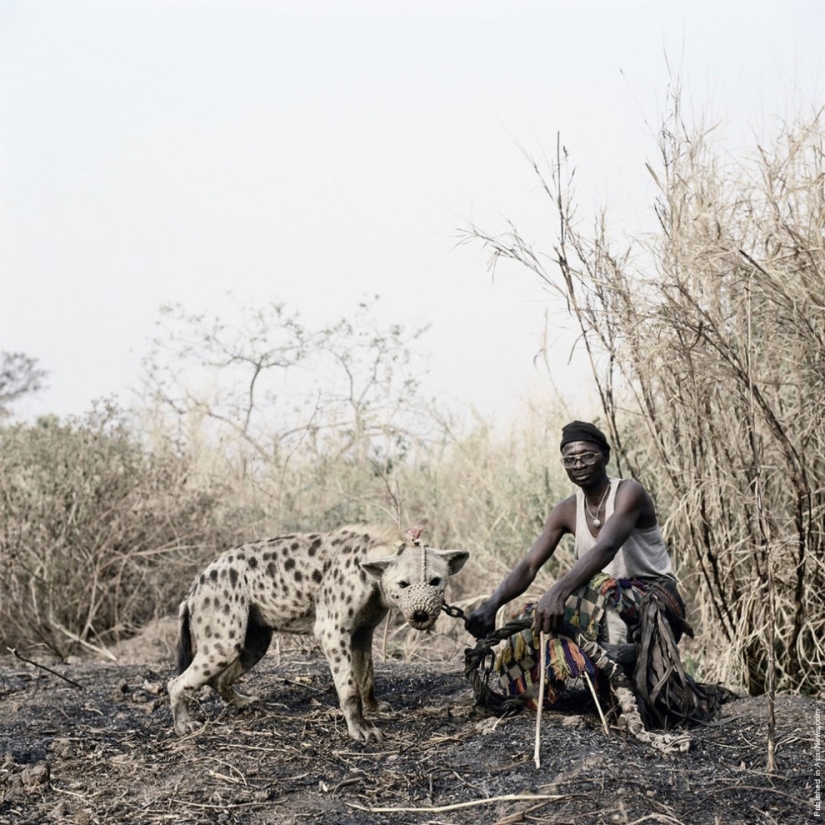
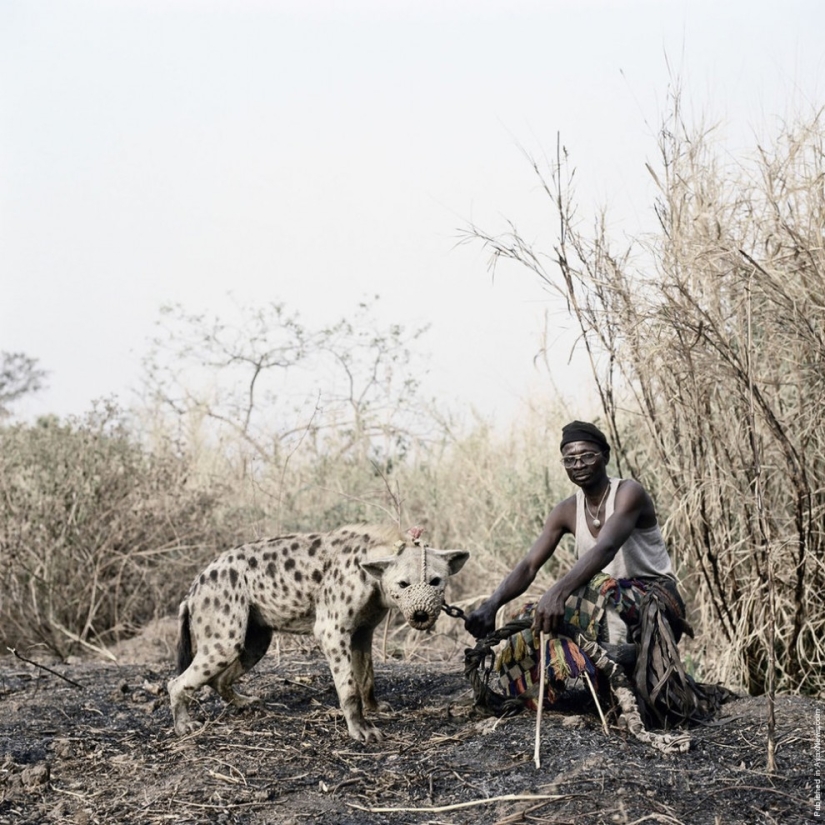
Mallam Galadima Ahmadu with Jamis, Nigeria, 2005
Mallam Galadima Ahmadu with Jamis, Nigeria, 2005. Pieter HUgo.

“The Hyena and Other Men — Pieter Hugo.” https://pieterhugo.com/

Crossposted at substack.com. This is one entry onReactions to papers/books on evolution~morality.