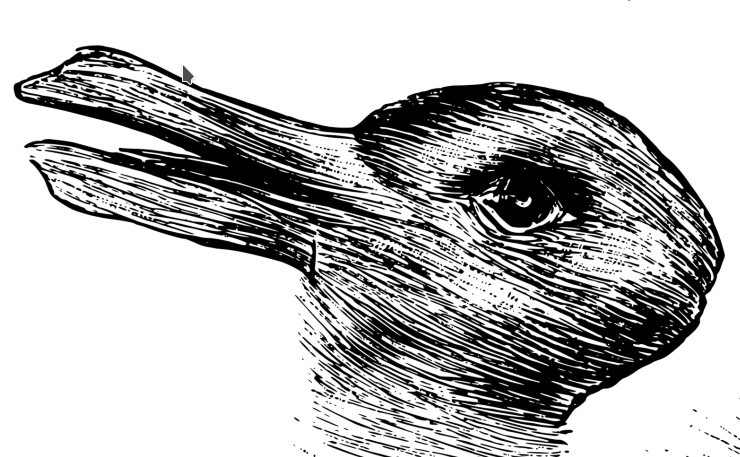
world/empire/civilisation
'Worlding' as a verb is not very popular. It is, however, increasingly used in recent decades. I must research how others are using it in detail another time.
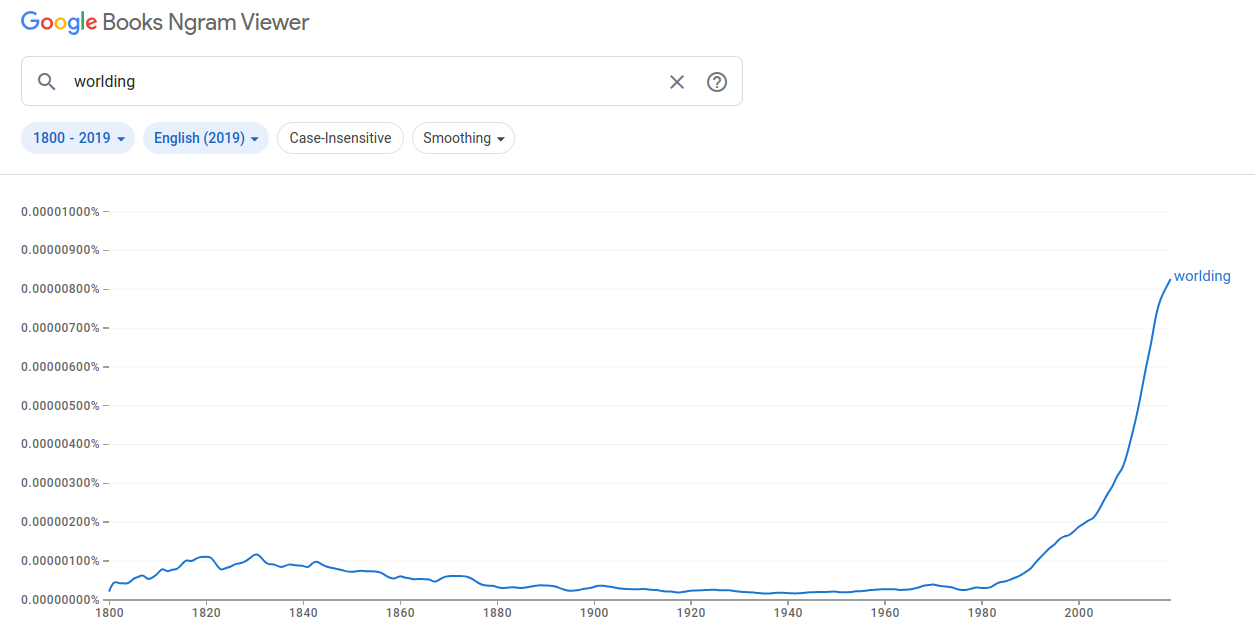
I use worlding as a very broad word, and distinguish it from “world-building” which is a more doctrinal, or self-conscious, or doubled-down, version of worlding. Or, at least, I do now, since I wrote Worldbuilding 101 ( or the original substack post, in which I had not yet made this distinction as clearly as I use it since then, only some months later).
So it might be useful to compare worlding to other usages in other contexts of meaning. Other vectors of intent.
Worlding is made from world, which is better known as a noun, but used now in this project, as a verb, and used a lot like living: making a home, making art, making friends, or perhaps just making do.
Like you know: homemaking, painting (art-ing?) befriending, surviving. Not being an idiot.
Grander efforts seek to control, or at least corral, those small labours of life.
One of these is empire, arguably a nomad technology of the steppe, of ever expanding contiguous territories, or, of mobile traders setting up shop far from home in the colonies (in settled or unsettled regions) seeking a liveihood from the transport of goods. The verb for empire is mostly thought of as conquering, but empires that last a while after conquering, engage in a lot of social engineering when not engaged in genocidal activities (which people who are attracted to genocidal methods as the be-all and end-all of empire-ing too often forget).
Empiring is a type of world-building that seeks to create societies and polities whose civilisation/s obey/s the emperor. While empires obviously incorporate diversity, empires do not really like it, being an empire is a good thing, but for the variety of conquered peoples can be a nightmare.
While each empire thinks, narcissistically, it is the chosen one, and thus engineers a “civilisation” so one size fits all, they often are not the only empire around.
If there is a clash of civilisations, then this is code for empires meeting other empires who hide their true nature in values they have scribbled together in happier times of un-impeded expansion. All empires dream they are the only one, so it is very awkward when they meet one another. Especially as empires rarely know where their borders are, as they assume everything is theirs already.
Empires and toddlers have a lot in common.
A failing empire is nearly always in tantrum mode.
Now civilisation/s need not be a part of an empire, they may have been part of a lost empire, or some degenerate version, but city-life that is civilisation can exist without empire. But it appears that like the poor, perhaps for the same reasons, empires are always with us.
Now being civilised just means complicated and sophisticated living that larger concentrations of populations can support, i.e. cities. All civilisation are based on city life. Some empires start as cities, some cities get swallowed up in them.
Empires just desperately want all their cities to have the same civilisation, if only as a matter of bureaucratic efficiency. Nationalism is a much later affair.
Worlding is the small human scale version of these empires' and civilisations' doings, but also their nemesis. Because worlding does not care about them. Imperialists find that offensive, peeps going about their lives and not thinking of England, or Russia, or Hindutva.
For the world is bigger than any empire can be, or dream, and more cosmopolitan than any city has ever been, and worlding promises the world, and could/might/may deliver it, if only empires did not get in the way by using civilisation as a tool of conquest by other means.
The world is not there to conquer, Alexander, it is there to world. You failed.
Conquering is not worlding, it is a doctrinal stupidity, a world-building error, at best it can build an empire that co-opts civilisations, but that is not the world we live in when we world.
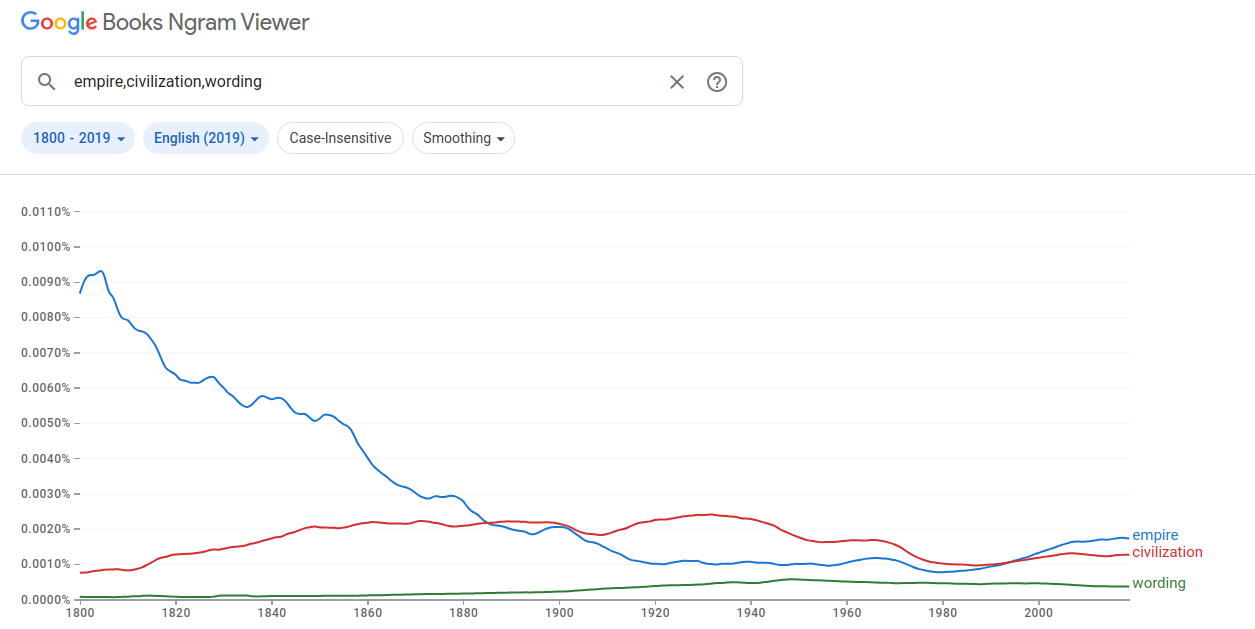
See also, following on from this post Worlding Index (substack.com) and Thrown into being Heidegger: to world versus welten ( substack).
See also my other Posts on the world, worlding.