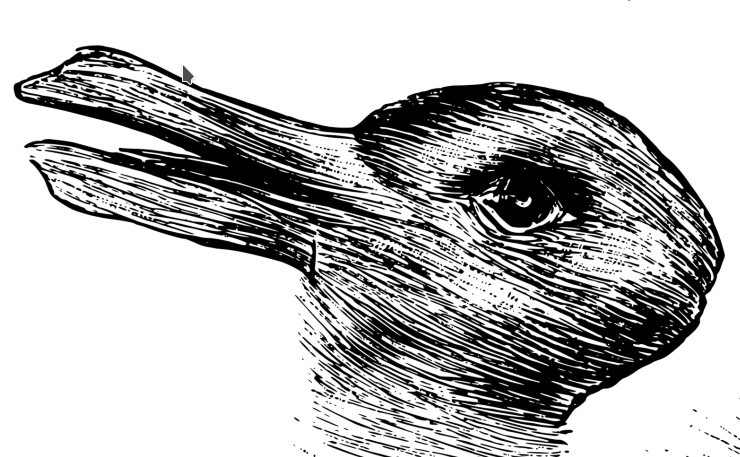
Alignment ⑪ versus trajectory
The drive to align arises in the body. Consciousness is an outcome which is just life wrapped up in itself.
IMPORTANT: what follows is animalcentric. That, for animals, the drive to align multiple lines of movement (vectors) arises in the body, not mysteriously but as naturally selected for. This is the main reason thinkers, sophisticated and folky, animals all, "place" plants and animals in differing categories, by their ability to co-ordinate movement, as if vegetal growth is not a movement at all. Because they just point themselves at the sun. Or so it seems to mere animals.
So while what follows is animalcentric, I do not support the division between plants and animals as in itself a key moment, that the need to classify is anything more than the limits of our (animal) understanding, rather than of an ability or lack thereof.
To start with, some proto-physics, or, at least, some proto-meta-physics, or, both
From my High School physics class I can still hear the groans when the word vector was mentioned from my classmates. Vectors had been explained the day before, when I was away. I was not at school that day. I don't think it was illness. It was early in the year, I think I had just returned from the summer holidays, in which we had visited relatives, in winter, in Europe.
So I always associated learning the word with those groans. Vectors groan at me, with intent.
A groan, I mean a vector, has measurements in direction as well as speed. It's important in Newtonian physics because without direction there is not much to say, or groan.
I'm going to skip over that whole series of hard science fields and straight through to biology and our animal life.
As animals, as it's Latin derivation indicates, means those who breathe, or at least, those who chests move in order to respire, plants also respire, but apparently do not breathe (both words animal and deer derive from breath/breathe). (I hope you have read and groaned through the animalcentric warnings above.)
It is this which informs our animal spirits, producing our groans or vectors. And quick as a breath our direction and movement can change mid-flight, or even stop to rest. If not freeze in pretence of immobility, a fine trick. But momentum only does so much on a planet, and besides invisibility stillness can also mean the end of breathing.
Now what a vector and an animal have in common is that they have a Point of View. The vector is going someplace from where it was. The animal is wanting to get someplace, or get something, or flee. Or rest, and groan when it has to get up again. Newtonian physics is an animal physics. See what I am doing/cutting/re-tracing there?
A direction has a measurement which requires some notice to cut and compare/re-trace/notice, to count and calculate. A point of view is at the very least some type of memory. Memory helps you groan. I remember when I learnt the word vector.
And help us grow.
Animals grow, they have a life cycle, a series of involuted trajectories, trajectories are a history of vectors, a taphonomy of movements, recorded in the body, not just by the body's POV machines (nervous systems), and not just the current Newtonian direction constanly adjusted and regulated, but also that which we call growth and ageing, the body becomes a track of it's life's history, the bones, the aged skin. For in that which moves changes over time, cells die and are replaced, each has their trajectory, their time in the flesh, if only an orbit of decay, and all framed by the selective pressures of evolution's chance and our bottlenecks of reproduction.
Those two main dimension of movement, the body in space, the body in purview, are brought together into agreement, in worlding the self. I call that propensity to push to make it work 'more'-'better', the worlding urge and alignment is one way to do this.
Alignment assume trajectories several, which each assume vectors which assume direction which assume a POV. Alignment is a basic drive, it predates the sex drive (thus plants are included). Alignment forms the molecules of the world in which we, as fish, swim without noticing the water, for all our talk of the sea.
When we get alignments really tight we call them laws or truths, and get a bit twitchy if peeps want to unravel them.
E. M. Foster's "only connect" is an expression of this animal grammar bewitching us ourselves into the world, even if novels are only practicing (as a friend of mine said of his children as he waits for grandchildren).
Only connect! That was the whole of her sermon. Only connect the prose and the passion, and both will be exalted, and human love will be seen at its height. Live in fragments no longer. Only connect, and the beast and the monk, robbed of the isolation that is life to either, will die. (Howard's End)
This is an entry in the taphonomy of worlding series which looks at the ways our language and categories are a process which in surviving— …fossilise themselves. The analogy here is that while bones can fossilise quite well, we should remember that bones are the result of a living process and so bones in themselves are a record of that life, and at death a skeleton captures a snapshot of that life. What is fossilised is already a record, but then fossilisation does not continue the life. Not even transhuman fossilisation will do that, even if successful on its own terms.
That life is a trajectory, a series of movements in which living and conscious processes align and maintain it's auto-a-nomia:
[(within) and without)]=[(self regulate) and move the body vectors (internal and external)]
over a landscape produced by the body out of the substance of the terrain. The landscape and body are a composition which treats of the terrain as a substrate, for food and shelter and threat and opportunity. The body at death is a record of that POV's history. For some the body at death will be absorbed and some of that history becomes energy and matter for their own bodies. For some the landscape is another's body (parasites).
A taphonomy of worlding must view the living processes, including consciousness, as records of their survival, that we survive as fossils of our own success. We are all living fossils, and that this applies to our bodily outcomes or excretions, our prosociality and the outcomes that prosociality produce, the tools we have among us: like language, culture, morality, religion, art, performance, competition in co-operation and vice versa, and that each maintains a record of those complexities, they also fossilize themselves, in interaction and ongoing traditions, while remembering that responsibilities descend (upholding a tradtion is the wrong way round, an error of unsupervised POVs gone narcissistic).
A key think to remember after all that mere description, is that aligning trajectories is a major part of that self-fossilising process we call life, alignment with one's direction, with all those complex movements a bodies makes and is composed of (internally & externally) is a key element which maintains individual "identity" and separates 'one' not out from the crowd, but from the commodity that is energy and atoms and gravity and, perhaps, time. Your life is thus already always a death note.
The circle of life and a cyclic cosmology of return or balance (examples of an alignment of metas) might be a better metaphor than some more soteriological metas about personal growth or salvation, but it is no more acccurate. The key notice is that life, may be more than not being dead, but without death, survival has no process. Death does not define life, or your identity, but does allow it to occur. Much like the world.
Sometimes the search for objectivity is the search for deathless world. Not quite the quest for immortality, but in the same worldless space, where no one can hear you groan.

Crossposted at substack.com
Part of the taphonomy of worlding, see also alignment ④ if it quacks like a duck in a row,