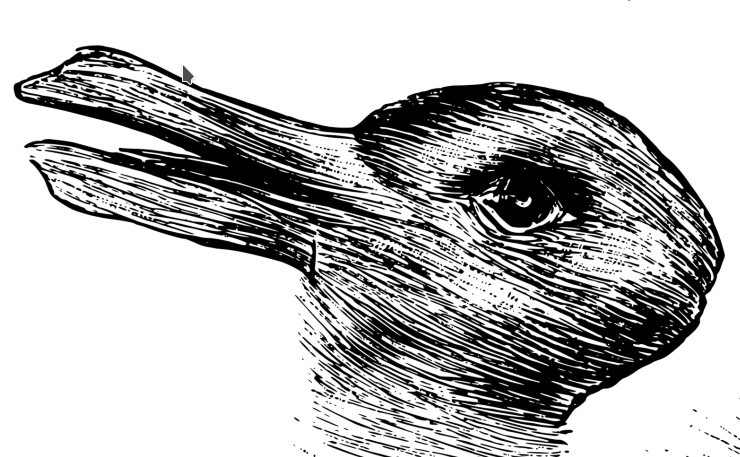
Alignment ⑫ a/symmetry
In my morning routine at work, the first thing I do is dusting.
I dust the books on their shelves. As I dust I note books pass by. I've read that one. I should read that one.
symmetry is more a sign or trace than an instruction
&
a straightline is more a mask than a purpose
So one of these mornings I saw Nobel physicist Frank Wilczek's A beautiful question : finding nature's deep design. I read that one a decade ago, I said to myself.

I wasn’t really taken by it. It is a bit too, well, Platonic; symmetry as an ideal form. Supersymmetry. Time Crystals. The mathematics is way above my head. So it just took up room in my annoyance warehouse, mine is not quite a mind palace.
Then I saw, a few days later, Oxonian physicist Frank Close's Lucifer’s Legacy: The Meaning of Asymmetry, and book that is fifteen years older.
Emphasis on asymmetry is much more my style. (And I'll get back to Iain Gilchrist and lateralisation another time.)
Both circulate around Higgs, Lucifer’s Legacy perhaps more so.

Now both Wilczek and Close reckon when symmetry breaks is important, for Wilczek it provides evidence of those higher energy states and their (super) symmetry pointing at creation. Both sort of say, that the proof of the pudding is in the eating, but disagree what has been proven by the lower world's asymmetrical breakages. Is it Wilczek’s change without change in supersymmetry and time crystals, or Close’s more fundamental view that without that breakage there is no reality for us to experience.

Symmetry is a type of alignment we might, or 'should', regard as an almost pre-existing condition, and so will always be popular in both popular and specialist imaginations. Symmetry is notable, or noticeable, because much of the natural world we live in hides it from us. We have to uncover it with effort, or make our own symmetries. Perhaps as a show of power over nature, and thus as a performance of our special prowess.
Symmetry has this special preference among us, because it underlines the animal’s ability to align, and not just in parallel or getting our ducks in a row. Our basic animal grammars rely on movement to structure the world of things (and from which the derivative idea of objects and human grammar based-ontologies and their reifications come much, much later). Symmetry is special because it aligns itself with itself, from a seed to a crystal, from an explosion out. Writers with major physics background with this type of preference include Frank Wilczek. Writers with major physics background with a preference for questioning that alignment as based include Frank Close.

With that questioning in mind, if symmetry were the originary state, it is the moment it breaks that reality appears. So if reality hides those fecund symmetries, a platonic search for them may not reveal any better informed gnosticism, for the breaking of symmetry does more stuff.

In a fully symmetrical cosmos can anything happen, at least, is anything at all noticeable?
Is the cosmos we experience formed by symmetry or its failure (at lower energy densities)? Or, rather, is the reality we experience only available to us where it fails? And life or consciousness or evolution is only possible in a cosmos where symmetry has broken down? And then, by contrast, where symmetry remains unbroken are "points of view" impossible, and while universes may exist where symmetry remains unbroken, and so no point of view can arises out of the commodity of flow of energys in such a universe, because everything is symmetrical and undifferrentiable, then no change with change is possible. And so… —no selection, no evolution, no life, no reproduction, no genetics, no senses, no consciousness, no self-consciousness. No point of view all the way up.
No questions will be taken for there is no time available, or at least no arrow of time thereof as some functiom of entropy and complexity.
In a symmetrical forest not only can no one hear a tree falling because no point of view can exist, no tree can even fall.

In this case supersymmetry might be another gap-filling kludge.
Looks like we have yet another dance at the edge of chaos, or should we say asymmetry.

See also other posts on alignment as method common to our worlding urges, a sub-project within the taphonomy of worlding. In comparison to alignment efforts one might also consider our efforts to enjoy the straight edge, see A wonderful straightedge of a book, Lorraine Daston's Rules: A Short History of What We Live By.
This is crossposted at substack.com
Resources amid the dust of ages:
Frank Close. Lucifer’s Legacy: The Meaning of Asymmetry. Oxford University Press, 2000.
Frank Wilczek. A Beautiful Question: Finding Nature’s Deep Design. Penguin, 2015.
symmetry is more a sign or trace than an instruction
&
a straightline is more a mask than a purpose