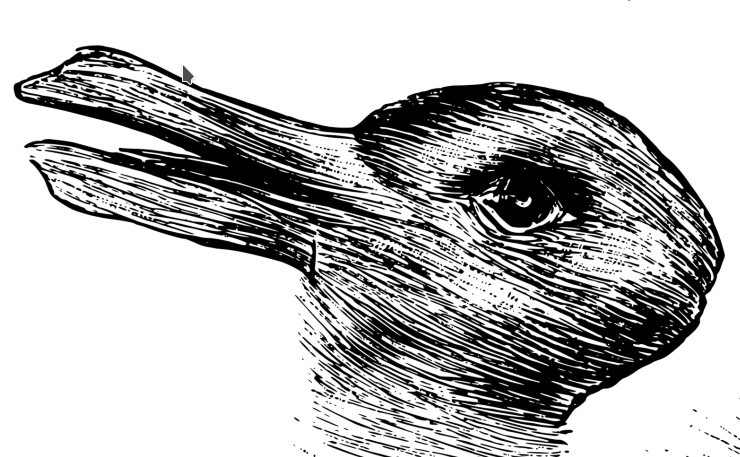
If I had a Haworth…
Haworth, Alan. “Genes and Citizens: Can Moral Philosophy Learn From Evolutionary Biology?” Res Publica (2001): via academia.edu. Web. 10 Sept. 2024. https://doi.org/10.1023/A:1011924516656
ABSTRACT: The claim that moral philosophers have something to learn from recent neo-Darwinian theory cannot be sustained -at least, not in the case of the three theses characteristic of the latter on which I concentrate. The first thesis, reductionism, is open to some serious, and familiar, objections. Neo-Darwinism can escape those objections only by weakening its position to a point at which it can no longer be described as distinctively reductionist. The second, atavism, mistakenly attempts to generalise from the apparent persistence of 'vestigial' behaviour patterns. Third, neo-Darwinists are frequently guilty of a number of confusions over the relation between fact and value. In conclusion, I point out that neo-Darwinism derives a certain ideological dynamic from the misleading supposition that patterns of explanation which succeed in one area necessarily apply in others. KEYWORDS: Darwinism, ethics, evolution, genes, naturalistic fallacy, reductionism, sociobiology
First of all I wonder, which moral philosophers?
Neo-Darwinian I guess refers to Dawkins era (the Selfish Gene is now 50 years old this last week)(I’m 60.).
①<nods> Familiar objections to reductionism.
② Atavism <must use that word more>(and ask Steve Stewart Williams if narcissists are successful parasites or throwbacks to our more baboon-like ancestors, or both.)
③confusions of fact and value --and we will ask in whose favour the mistakes are made?
③++ successful explanations used elsewhere— badly… if your only good tool is a hammer, everything looks like a nail.
What I do not get from the abstract (most abstracts actually) is their own take, at least not strongly, even with all the positioning. I guess it might be a spoiler.
But like, that’s what I am here for.
One might read that exact abstract heading another paper but end up with a quite different take in the POV.
I am not in the business of writing moral philosophy as a moral philosopher (I am here by accident) so the requirements of writing that paper of of little utility to me. (I.E. the industry framing or ecosystem assumptions are lost on me, and if they were not lost on me I would not care more – is this what people mean by ‘it’s only accademic’?)
① Reductionism
Anyway, we get the POV at the end of the first paragraph, foreshadowing the conclusions:
The other is that neoDarwinism’s affection for reductionism does a great deal to explain its ideological dynamic.
After this point it gets all very analytic with its PnotP, with some type of analysis about reductionism using set theory I guess.
We jump from Dawkins back to E.O. Wilson.
The author Haworth intervenes with Wilson using prepositions. I find this comforting, a lot of our intelligence is about choosing our well-angled and best fitting preposition, and then bashing it through the round hole. Where did I put that hammer?
Next the framing I was looking for:-
“require institutions for their existence” – to “brute” facts, which do not.⁸ This being so, then, let us note in passing that Wilson’s assertion that “the transition from purely phenomenological to fundamental theory in sociology must await a full neuronal explanation of the human brain”⁹ must be false, because sociology is concerned primarily with institutional facts.
Yes.
Forward and back to Dawkins. This week I listened to an interview with Dawkins, from the time of publication of The Selfish Gene. He mentions specifically he wrote the book in response to Robert Ardrey’s focus on group selection (I have some reviews of Man-the-Hunter Ardrey’s work ① and ② and ③ ). So the emphasis is on a failure (as a hammer), of that social reductionism of evolution, however well-written, and Dawkins sought to provide a more correct reductionism of how evolution worked in The Selfish Gene. That attack on group selection looks, in more recent framings, like it slipped over on to how groups work as things themselves, as res publica or social institutions, ie. outcomes which manage themselves. At least in the public eye (Haworth uses the word iconoclastic to describe the de-framing of groupwork outcomes.
For the historians of science that comparison with Ardrey would be the one to work on, the recent by-catch of more social investigations (as collateral damage, or not) into or on moral philosophy, or, the philosophy of political science is minor, except for all the well-knownness of their names.
Quite infuriating I know. I do think the idea of an The Extended Phenotype is a bridge here see Ardrey ③. Haworth finds his own dispensation. With a few more PnotPs.
Then an aside on Daniel Dennett’s “bland” and “preposterous” forms of reductionism.
② Atavism
Humans as political animals are social beasts (so remember, as we are prosocial, the group is a type of tool) (I am hoping Haworth gets to state that idea) (I just had it then as I typed).
On to Matt Ridley & Steven Pinker!
‘Russian doll’ picture of morality
More true today than ever.
We divert to altruism within which atavism survives, if defined too technically: ‘Thus, Maynard-Smith writes that “[W]hen a person (or animal) increases the fitness of another at the expense of his own fitness, he can be said to have performed an act of altruism.”²⁵ ’ and we ride over to see what Foucault did to Damiens.
③confusions of fact and value
This is an oldie but a goodie.
In this case it is about selfishness and the robber barons who claim to free us by enslaving us with their ownership of us (they use us as tools, and do so by naming one among us as the best and only tool).
Values are an effort not a commodity however, the gold may shine, but its value is a fact of labour.
If I had a hammer… I hammer out Danger!
to the conclusion
Rawls versus Dawkins.
Memetics is a type of useless tool (language is a virus). (I ask is repetition an effort??)
So, I think to myself, perhaps narcissists are, afterall, both useless parasites, and viral atavists surfing the tool of society I call the world.
Haworth asks
‘by assimilating the world of the political to that of the a-political – to the realm of the gene-like micro-entity”
and then hypothetically answers with a Comtean reference to a technocracy (I would add as more recently stolen by libertarian fantasists of a natural order [of tools?]) much “like Marx” said of priests and religion.
The shaman's magic is a shell game.
I would further add that this move, labelled as “assimilation” by Haworth, arises in the exact same worlding urge with which a Dawkins or a Ridley seek to evaporate in others (unescapably hypocritically), when calling out moral philosophers, or priests. Or others do (everyone) when calling out the woke, or the unconsciously racist, and that all of them, whether reductionistically or holistically, when ignoring that, which we as a prosocial species have in society, that we can call the world, is a tool at our disposal (like any extended phenotype). It is no wonder then that some among us, and born into the very world that allowed them to be, then seek to remove that tool from some of us, and indeed they would sell their grandmothers to do so. They do this, sometimes in the name of everyone, sometimes in the name of a golden me, and some seek, in all cases of “assimilation” to give that name the name of some more natural order, like true communism or freedom’s libertarianism or some other outcome of worlding, to selves ethnic, religious or artistic, and prepositioned into an identity PnotP and this natural construction becomes our favourite hammer, and everything looks like a nail or a pronoun.
Crossposted at substack.com
This is part of a series of reactions and reviews of works dealing with evolution and morality.