“flow” and “movement”
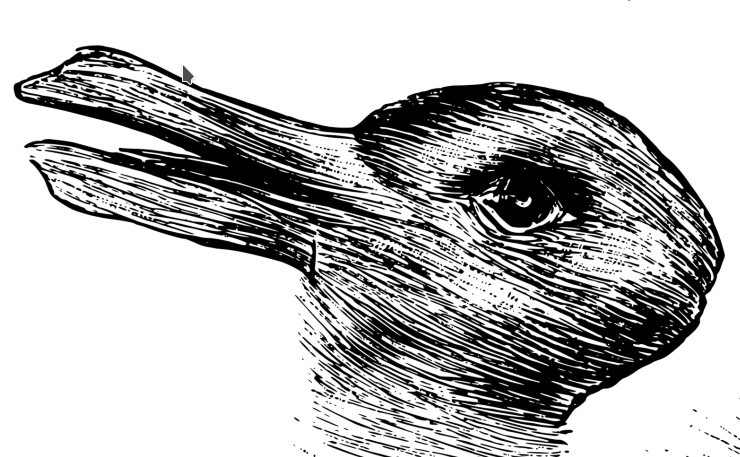
same same but different

Breathe.
In the context of poetry as a making, which is grounded in the figuring out of living a worlding a self… among others —arises way back where LIFE as we know it composes itself in response to a flow, or gradient, of protons in water. At times capturing but flow rupturing the eddy of that movement that is captured by itself, now not itself, gastrulating a separation of inside now and here… —from outside then and there.
Breathe in.
That recursive setting off into predicament, as membranes double-in on themselves into their own particulars, to maintain the eddy, the flow, the rupture, the particular, the double-down redoubled into one …duplicitous— composition of body as each cell lifts up from the landscape. The cell wall defines the outside by bounds, an echo of the pocket in the rock. Outside, not quite not me, not abjectly you, not yet objectively subjectivising the difference, and movement was born well before this well-spun moment, born out of the flow, of the flow, a flow caught in itself but…
As much as we carry the ocean in our blood and tears and sweat.
Repeated, tide times, and the successful bods replicate in multiples using all their survival into reproduction of numbers untold, who tell tals that all tend towards the multiplicity of life, an involuted trend, such that the teeming writhe.
A flow all of their own inside, and moving outside, and the aggregate commodities become a landscape of movement, snakes alive, and the animals gain a point of view, not just a world among themselves, when it all becomes too much. Hunger is the first should.
They are all out to get me in here.
The fear we fear, as if there is no flow, originates in loss, the fear provides a new success, worries like a wallow, as if brand new. New fears, new hopes, new worlds, and the intuitions of a brutal survival feasting on ideals, as if the fears hoped they were better than they were, so messy, we like it simple, simply better, best, good, bested, killed, eaten… —like shortcuts to easy money, unreachable, but we are urged on, and our paranoia blames our failures to become perfection projections unto others, and we learn to want to believe.
Or we cast hate again onto the new outside, as we observe to our own satisfaction and take no credit for what is out there. On reality’s failure to live up to our own life’s preferences, as if we had some preferment because we feel we are special, but lost it to some unfair enemy, and if we didn’t feel special we would not be here feeling anyways. But we are so good that we have a nemesis.
Are we there yet?

Photo by Steven Wilcox on Unsplash
In the context of biology, the terms “flow” and “movement” can be understood in relation to energy, matter, and physical displacement in plants and animals.
Breath out.
From Khanacademy :
Flow often refers to the transfer or cycling of energy and matter within an ecosystem.
For example, in recent aeons, energy enters an ecosystem when plants carry out photosynthesis, capturing energy from the sun and storing it as chemical potential energy. This energy then flows through the ecosystem as animals consume plants and other animals. Similarly, matter cycles within an ecosystem, moving from plants to animals and back again through processes like consumption, decomposition, and nutrient uptake.
Movement, on the other hand, usually refers to physical displacement.
In animals, movement involves displacement from one place to another. This can be for various reasons, such as finding food, escaping predators, or seeking mates. Animal movements involve the movement of the entire body and are facilitated by muscles.
In contrast, plants generally do not move from place to place. Instead, their movement involves bending, twisting, and elongation of plant parts2. These movements are often related to growth and are typically in response to environmental stimuli, such as light or gravity. For example, a plant might grow towards a light source (a movement known as phototropism) or roots might grow downwards into the soil (gravitropism). These movements in plants do not involve muscles, as in animals.
In summary, while both plants and animals exhibit flow and movement, the nature and mechanisms of these processes can be quite different.

Photo by Anne Nygård on Unsplash
Original posted on substack.com February 2024, and updated here.