Figuring out the grounds beneath the world: noyau, lek and home
In the review of Robert Ardrey's The Territorial Imperative I cover my discovery of his book on my shelves. Here I wish to explore the implications, by which I think I mean metaphysics, but in a good way, that is… —poetically, of Ardrey’s use of Petter’s term noyau.
The discussion of noyau, or noyaux in the French plural, is a very useful frame from which to consider the various figure/ground relationship and their increasing complexities in the ecology of natural systems which pivot on the natural selection of individuals by way of their bodies and extended phenotypes. And from which our own relationships with the world and reality are founded.
(As an aside, I think in time it will explain away the metaphysics of group selection when it appears to appear in the ecoplexity of life).
Robert Ardrey’s use of Jean-Jacques Petter's use of noyau as a label for a society of inward antgonism (page 168) is key to my enjoyment of the book intellectually as it allowed my to finally line up all my ducks in a row. (Noyau is French for kernal or pit of stonefruit for example, but I will refrain from all nuclear power jokes and mentions of the Rainbow Warrior bombing, but thinking of a noyau as an unstable aggregation liable to go-off as beta particles at any moment at the slightest disturbance is probably helpful.)
Ardrey uses this term to describe all those instances where, in the magic of life, individuals gather for a season and bicker and squabble and otherwise behave badly, and we wonder why is it worth their bother. Why don’t they just do whatever they are doing elsewhere with more room? The earth is a big place, why that tiny island? It’s a big island why that knoll or saddle? Why not just spread out a bit and avoid the consternation?
The quick answer is that they are fighting for scarce real estate and are thus constrained by the right mix of location, location, location. That might be how it started but…
![Sage grouse lek mating arena, in which each male, alpha-male (highest ranking), beta-male, gamma-male, etc., guards a territory of a few meters in size. The dominant males may each attract eight or more females.[33] Higher-ranking individuals have larger personal space bubbles.[34] Bird leks may have 10-200 individuals. A strict hierarchy accords the top-ranking males the most prestigious central territories. Females come to choose mates when the males' hierarchy is established, and preferentially mate with the dominants in the centre.](https://whyweshould.loofs-samorzewski.com/media/posts/127/800px-Lek-diagram.jpg)

A subset of the noyau is the lek. A lek is a gathering of would be suitors who for some reason hang out together in the same area in order to bicker and squabble, as display, or in order to display on a home ground with good amenity, or directly capturing the very best (at least the most highly regarded) spot within the lek. For some reason they coordinate this (same place - same time), for generations in some species. For some reason the bother is worth it to allow the easy comparison in the eye of the beholder.
Is the beholder choosing the winner of an apparent contest, or the worth of location, location, location as an index to the best sort of mate. A ‘home territory’ as a element of the display of fitness, putting the best foot forward. Is the best spot the best because it is chosen by the best applicant, or is the best applicant selected because it has the best spot? Points at ground, stamp stamp stamp. Here I am I am me right here. I am here. Here is me. Pick me pick me pick me.
I have always found it interesting that business of a similar kind often gather not just in the same precinct but as very close neighbours. Businesses selling antiques are often in very close proximity.
Why not remove oneself from direct competition. Why cordinate the direct competition? Why co-operate in order to compete? (Ardrey asks this question in terms of a " 'biological morality' ".)
In any case, the 'home territory' is part of the extended phenotype and is 'grounds' then availble for sexual selection as much as any plumage or horn or appendage of the body. The extended phenotype is also available for sexual selection.
But what is home?

Robert Ardrey uses Petter's notion of the noyau to discuss those leks and breeding colonies where the battle-lines are draw up which in some way assist the survival of the individuals and their offspring, a terrain which is not utilised elsewhere, at least not by all species at all times of their life cycle. The bickering itself helps somehow, that apparent waste of energy or effort provides some benefit to survival, to those who survive at least. The bickering is itself is a display.
In a social learning species, the socializing is the display.
At this point, I’d argue that the focus on a ‘territory’ as Ardrey uses it, as something captured, something to be defended, is somewhat alienated from the process that occurs in natural systems. But that the elisions of the body and its beauty, for the body's grounds and its location, as the key feature selected in partner seletion is very keen.
But still, it is as if, the individual falls from the sky to battle out with others who have also sprung fully formed from some monster god’s thigh, and the battleground is merely the arena’s sands, and all sand is but a commodity of space with no sense of home. Re-birth is possible here because home does not exist. There might be a re-spawn point but there is no home. It is all movement, and… there is no space given to raise the children.

(In Valhalla, the original fight club, nothing ever happens because it all stays therein.)
All body’s have a home. They might be tiny, they might extend into ranges and explorations, but they provide a home for reproduction.
The lek and the noyaux provide that home for reproduction and child-raising. (The battle royale is a moment, not a home, even as it uses the territory of home as a exaggeration fit for Queenly selection.)
The leks and noyaux are examples where this basic feature of 'home' is exaggerated and becomes a moment or time of in-game selection. The pay-off for all the bother is successful reproduction, or better child raising. There might be a mismatch between the effort expended, and less confrontational methods might pay-off better, but some odd twist of fate has gone down this fitness landscape pathway.
In a social learning species the world is a type of home.
To be homeless is nearly impossible, no matter how small home is, it will always be there, if not big enough to survive with there will be an 'idea of home' remaining.
This is why the actual homeless are treated much like the dead. The dead are an idea of the living best avoided, deserving social rituals to help seal categories of the home world.
In fact, one could argue the peacock’s feathers on display indexes the fitness provided by a good home, not just the fitness of the individual (as if they appeared out of thin air).
Leks are like a halfway house which doll-house the world into a stage of mini-best-in-show and their understudy mates, understudies without whom there is no show to go on.
Thus, the variety of bright plumage or hefty horns, extend embodied fitness displays outwards to include location, and so from home into the world. But not out into the world, the world is dragged inside the display, the way a mouth bites an apple.
In a social learning species, a full display of fitness can even include grounds of our socializing, not just bickering a hierarchy into shape, but also the negotiations that deconstruct any baboon-like hierarchy into a egalitarian impulsivity of civility (AKA the polis).

Ardrey puts his three faces of Janus (identity, stimulation, security) ‘as psychologically motivating for all higher animals including man’ (page 333 !) but I would argue that it goes right back to when the first cell lifted away from the substrate/subcorpus (a wet rock after Nick Lane). It may well be psychologically motivating in higher animals, but this is not a recent evolutionary innovation but goes right back to the origin of life. It is an elaboration of that moment in time, of time, to time.
I’ll use the process Nick Lane described in The Vital Question: Why Is Life the Way It Is? with reference to the idea of home rather than property or territory.
Life appears at home first, and then we move out to explore and discover a world. ‘Reality’ recedes.
It’s figure/ground all the way down.
flow/substrate/eddy/membrane/memory/body-place/body-home-terrain/body-home-territory/body-landscape/populations/complexity/umwelt/landscape-with-landscape-of-home-bodies
complexity/someone else's body as a landscape, your eyebrow follicle as a home

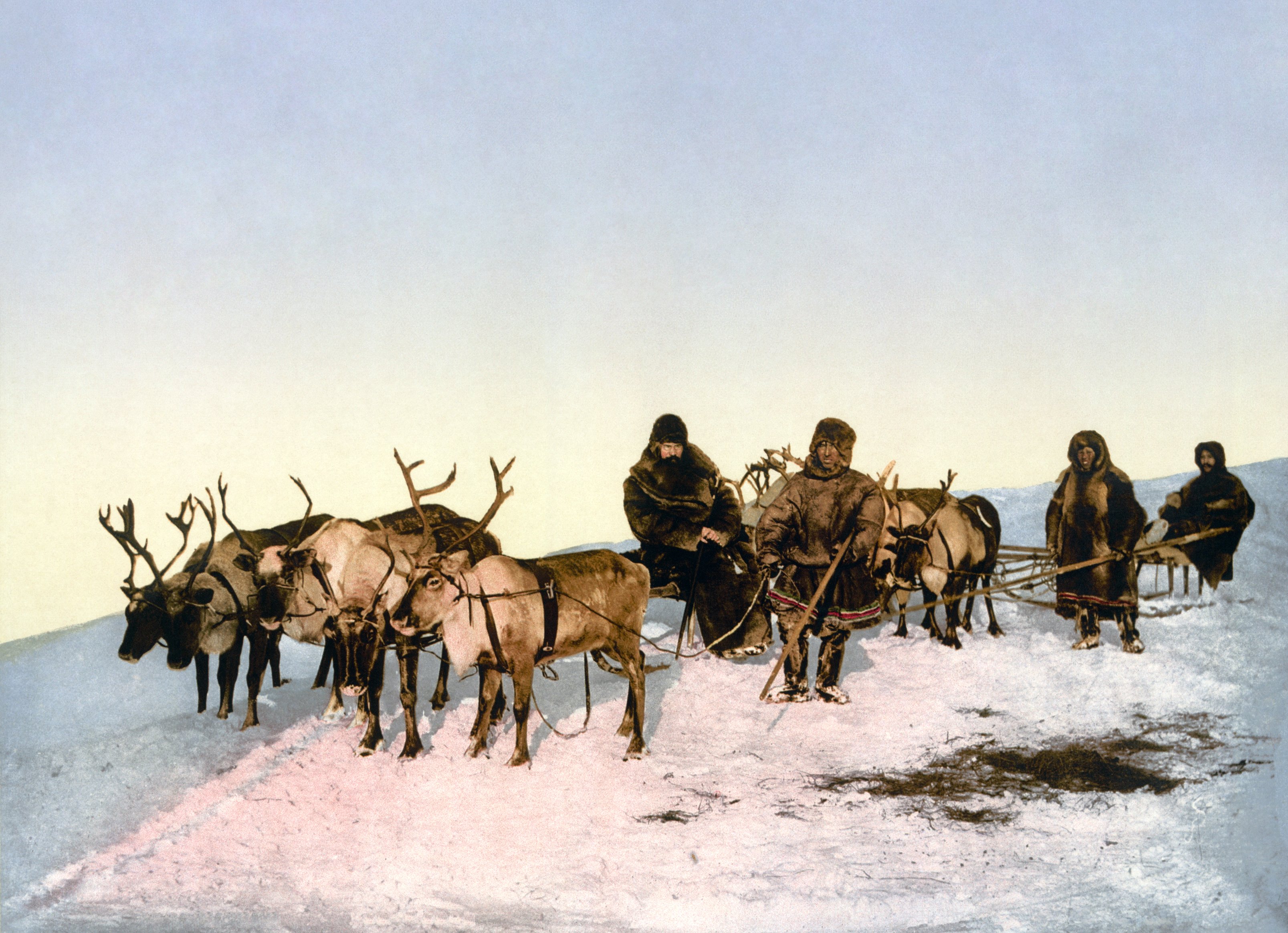
complexity/a herd of reindeer as home | populations used as a home, they come with the territory.

Using Ardrey’s three faces of Janus from within this poetic viewpoint where it is figure/ground all the way down:
Identity gives form to ‘security’
Security gives a place for 'identity.’
Stimulation does the giving. (It is a rite of memory, or at least tradition and cycle. This is not a face it is Janus dancing the faces about, usually from/over/across/in the… —gap.
This is why face can be so important in social animals, where the home range is society, the primary territory i.e. ‘home’ in social animals is the group. The face is the border of home, your true self is some kind of oneness ownness (Max Stirner) selfsameness in the noyau. (If you are looking for true self you ain't got it, but if you've got it, you got it.)
The noyau is the result of 'home' including a large measure of the group, not just the terrain that cups the body’s moves, i.e. the territory can often include non-landscape features. At least for that season when a noyau like a lek gathers its efforts.
But of course, originarily the substance of the body and substance of the home both arise from the same substrate and flow. There's no reason these later differentiations cannot be combined and overlaid in strange ways that increases in complexity allow (ecoplexity)(invaginations of gastrulations).
The group might be horrible but if they leave the group they leave their home.
The world begins at home, if you lose your home, the world may disappear from sight.
______________
Robert Ardrey. The Territorial Imperative: A Personal Inquiry into Animal Origins of Property and Nations; Illustrated by Berdine Ardrey. London: Collins, 1967.
Nick Lane. The Vital Question: Why Is Life the Way It Is? London: Profile Books, 2016.
Max Stirner. The Ego And His Own: The Case Of The Individual Against Authority. ebook. Verso, 2014.
Crossposted at substack.com